
ROLE GUIDE 04
Site Safety
Prevent incidents by turning safety requirements into daily jobsite routines
- 01
- Pyeongtaek Chemical
- 02
- Jobsite + Training Room + Office
- 03
- Training + Inspections + Records

Based on the day-to-day work and materials shared by a site safety specialist.
These are restored, high-resolution versions of actual work photos. Helmet stickers and other identifying details were removed for privacy.
WHAT SAFETY MEANS
Site safety is more than enforcing rules
Understand the construction sequence and site conditions, then develop safety measures crews can use. Discuss hazards before work, inspect conditions on site, and follow up on each issue until the correction is verified.
One announcement is not enough. Daily toolbox talks and inspections work together with recurring training, risk assessments, and documentation to prevent incidents.
OPERATING CYCLE
Eight steps that make prevention repeatable
The cycle begins with the day’s work and hazards, continues through field observation and corrective action, and closes with verification and a complete record.
01 Review the day’s work and hazards
Use the toolbox talk to discuss planned activities, key risks, and required controls before work begins.
- 01
Review the day’s work and hazards
Use the toolbox talk to discuss planned activities, key risks, and required controls before work begins.
- 02
Provide role-specific training
Provide regular refresher training, task-specific instruction, and new-hire orientation based on the work and recent incidents.
- 03
Inspect the jobsite twice a day
Check work conditions, personal protective equipment, and whether required controls are being followed.
- 04
Ask employees what the plan missed
Listen for hazards and impractical conditions that may not appear in written procedures.
- 05
Assess the risk and find the cause
Use field evidence and incident records to understand why a hazard exists or keeps returning.
- 06
Develop a workable control
Agree on a measure that protects people and can be applied by crews and supervisors on site.
- 07
Correct and verify
Return to the jobsite and confirm that the corrective action meets the same requirement.
- 08
Document the result
Maintain training, inspection, assessment, and corrective-action records for compliance and future prevention.
FOUR PRACTICES
Build recurring safety requirements into daily jobsite operations
Inspections, training, corrective action, and documentation must reinforce one another to produce lasting results.
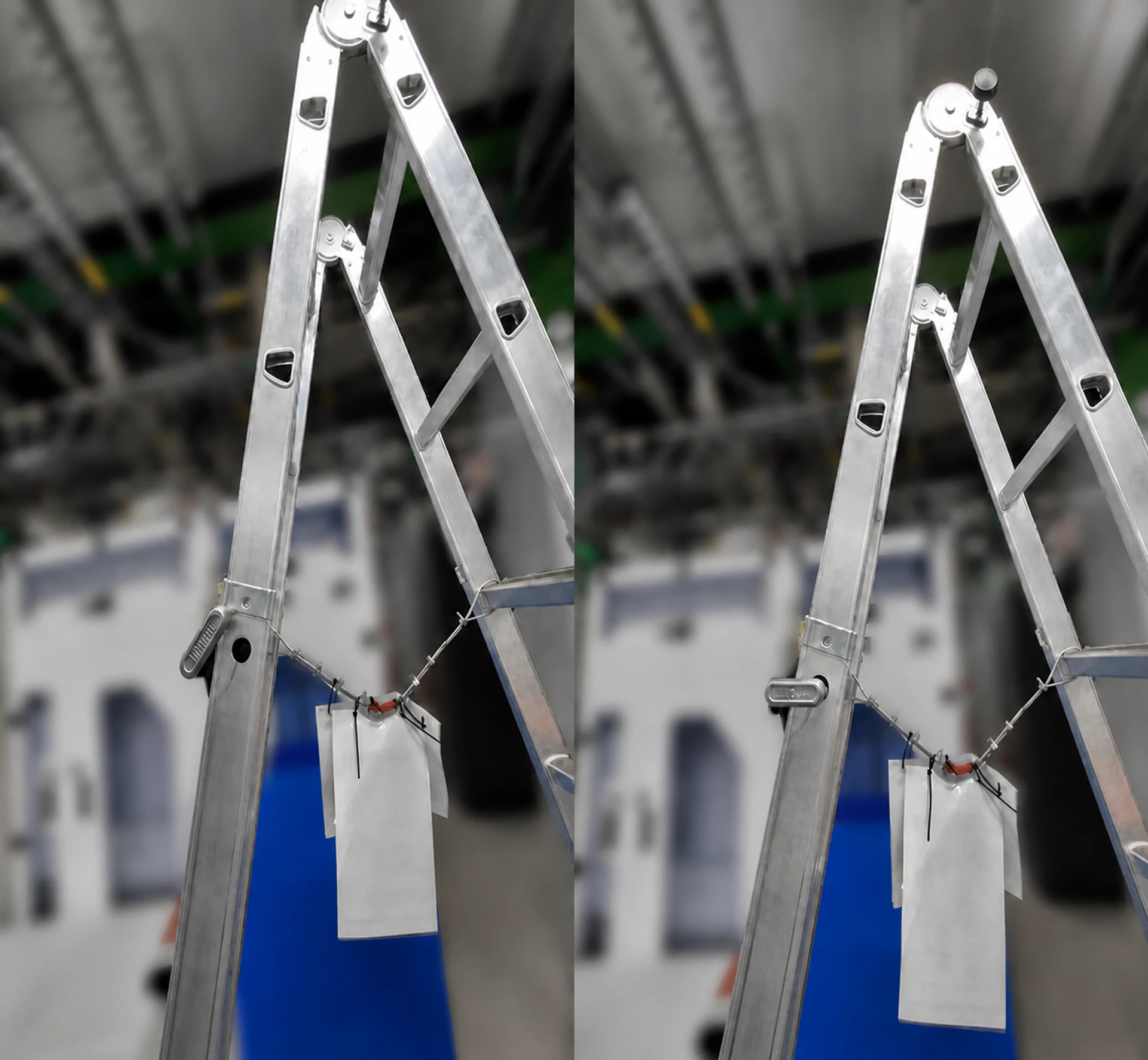
The ladder could fold or lose stability during use, creating a fall or tip-over hazard.
The hinge lock was engaged, and the correction was verified before the ladder returned to use.
Daily field inspections
Inspect work conditions and hazards in the morning and afternoon. In this example, the team found an A-frame ladder with an unlocked hinge, secured it, and verified the correction.
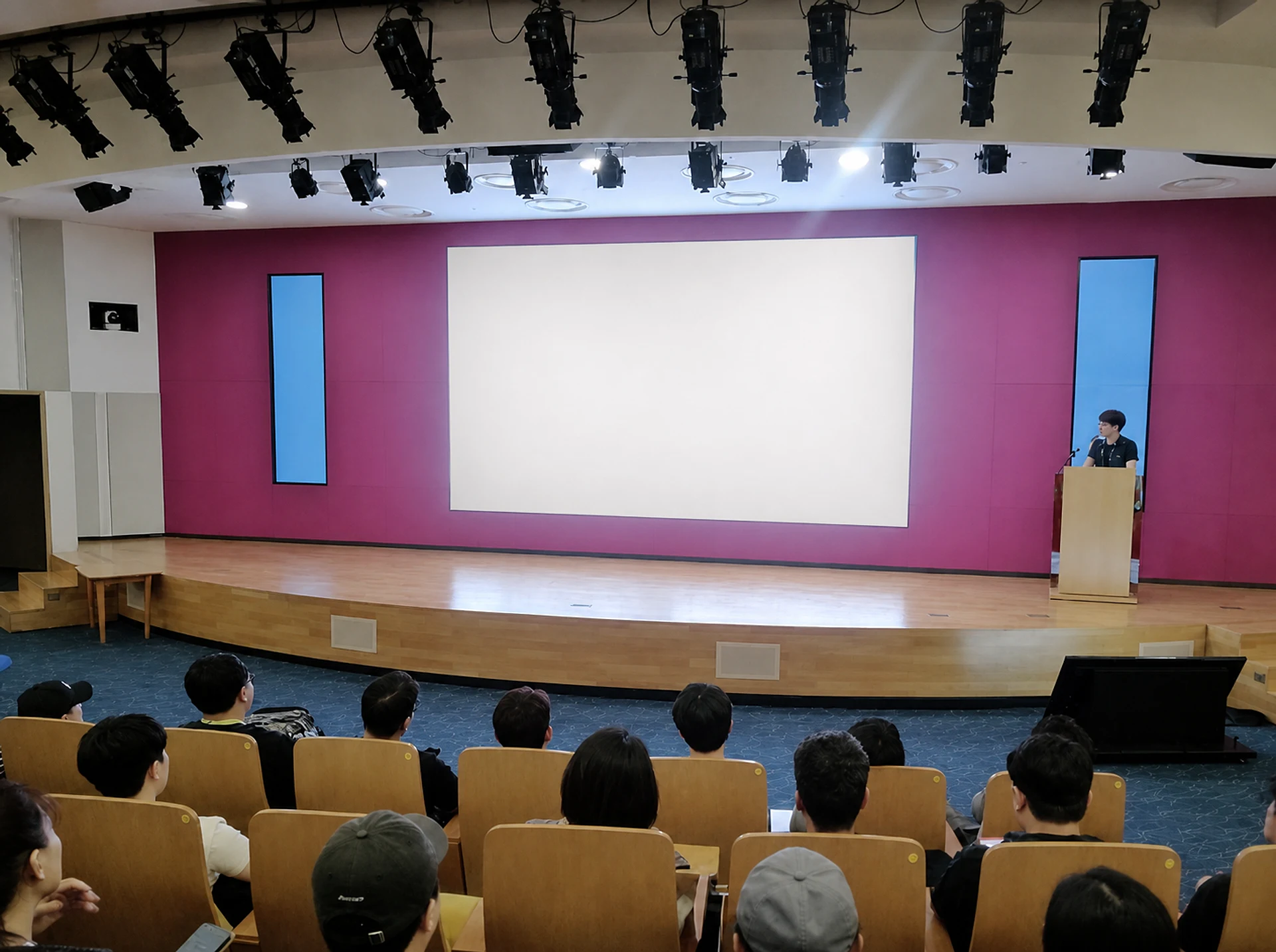
Recurring and job-specific training
Lead monthly safety training, targeted training for higher-risk work, and toolbox talks before each shift.
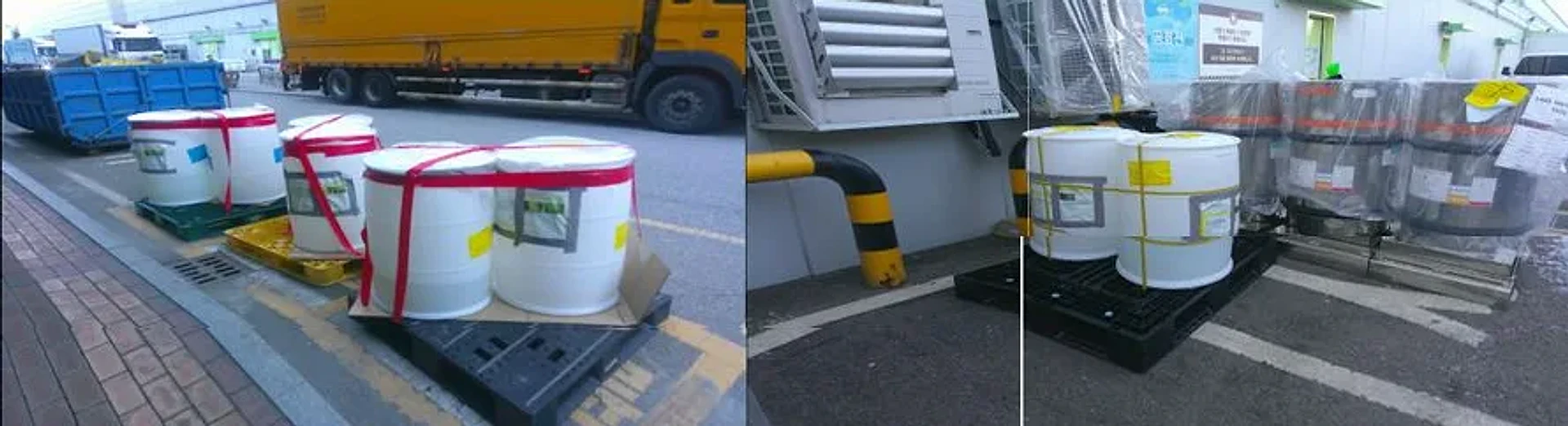
A drum could tip during handling and cause a chemical leak.
The drums were secured to the pallet to prevent tipping and reduce the risk of a chemical release.
Risk assessment and corrective action
Assess hazards, apply corrective measures, and document the before-and-after condition to reduce recurrence.
DOCUMENT CONTROL
04 / 04- Schedule
- Evidence
- Recorded
- 01 Inspection log
- 02 Activity report
- 03 Risk assessment
- 04 Training record
Compliance documentation
Keep inspection logs, activity reports, risk assessments, and training records complete and on schedule.
CASE RECORD 01
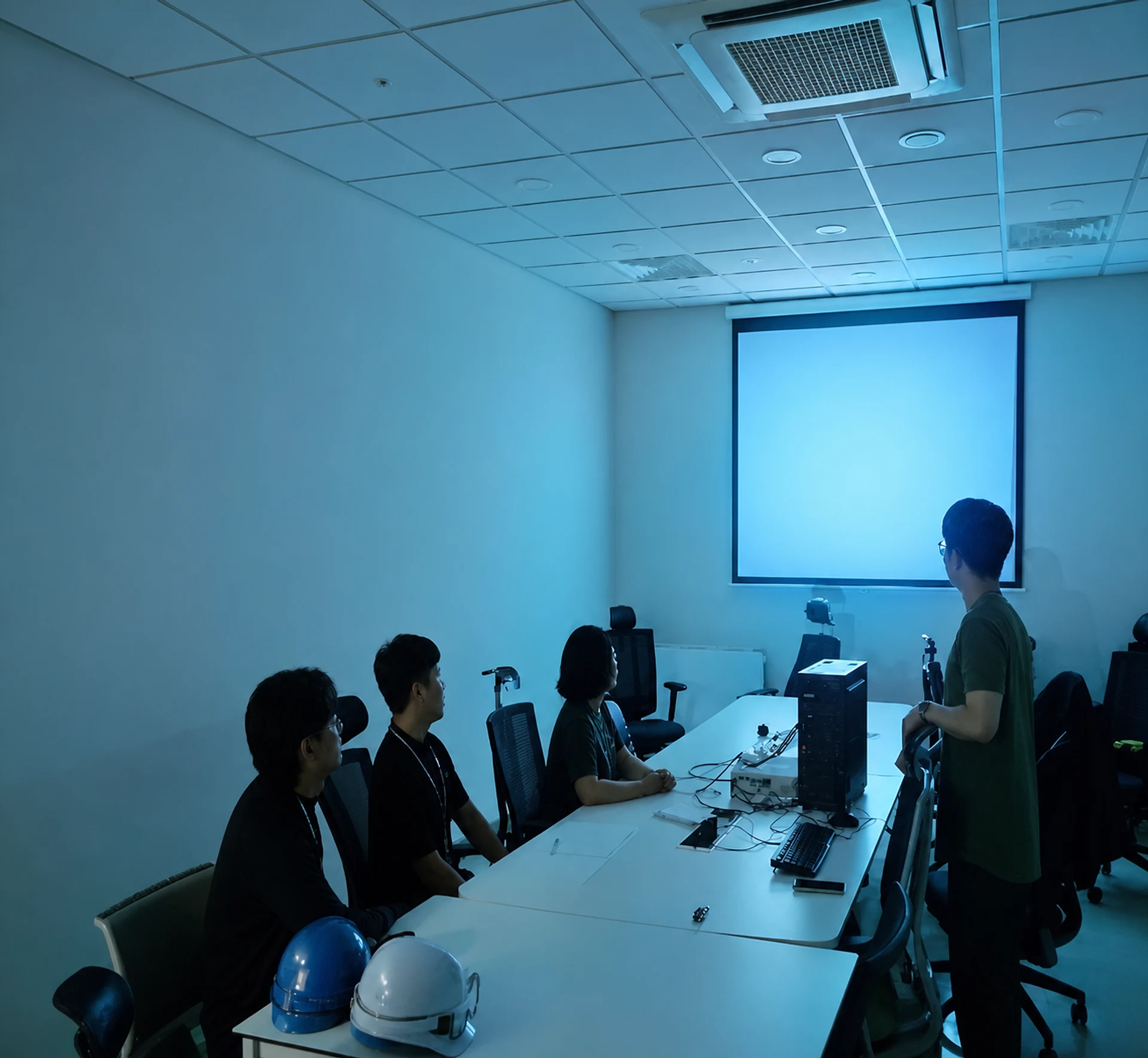
Repeated safety issues among new hires led to a practical training guide
The team found that safety issues were more common among new hires and used those findings to create clearer guidance and improve training.
- 01 · REVIEW
Identify the pattern
A review of environmental health and safety findings showed the same issues recurring.
- 02 · ANALYZE
Trace the pattern to new hires
Field managers confirmed that the findings occurred more often among newer employees.
- 03 · BUILD
Create jobsite-ready guidance
The team created practical guidance on protective equipment, common hazards, findings, and controls.
- 04 · REINFORCE
Train and reinforce
The guide became part of new-hire training and an ongoing jobsite reference.
BEFORE10 per month on average
AFTER1 per month on average
FIELD INTERVIEW
Worker hazard discussion checklist
Before work, select at least four relevant hazards and review the controls with the employee.
Hazard selection demo 010
-
01 Work at height
-
02 Hot work
-
03 General work
-
04 Chemical handling
WORKING TOOLS
Turn field conversations into better training and inspections
Capture what employees experience and organize it so future toolbox talks, training sessions, and field checks can use it.
- 01
Worker hazard discussion checklist
Document the hazards employees identify and the controls required for each type of work.
- 02
Training materials
Turn recent incidents, updated requirements, and recurring findings into clear, practical instruction.
- 03
Inspection, assessment, and SDS records
Maintain inspection logs, risk assessments, and chemical safety data as working references.
WORKING TOGETHER
Keep every team informed and ready to act on safety issues
Safety teams, site supervisors, and employees share incidents, requirement changes, findings, and corrective-action status so the response stays coordinated.
Corporate Safety
Share site safety conditions and standards, and coordinate required assessments and programs.
Hwaseong Chemical Safety
Compare experience and preventive measures from similar work under different jobsite conditions.
Pyeongtaek Chemical Site Safety
Lead the daily cycle of inspections, training, corrective action, and reporting.
Pyeongtaek Hook-up Site Safety
Share risks and recent incidents from another discipline operating at the same site.
Employees and Site Supervisors
Provide the closest view of jobsite risk and help develop controls crews can use in practice.
GROWTH IN THE ROLE
Experience builds stronger communication, judgment, and systems
Leading training, responding to changing site conditions, and reviewing past findings help you make better decisions and explain them clearly.
- 01
Safety communication
Toolbox talks and training build the ability to explain a requirement clearly and in practical terms.
- 02
Field judgment
Learn to evaluate conditions that a written rule cannot resolve by itself and consult the right people when needed.
- 03
Knowledge management
Build a useful record of incidents and updates, then turn it into better training, inspections, and reports.
FIT & ATTITUDE
Who succeeds in site safety
You do not need every rule memorized on day one. What matters is the willingness to understand the work, listen to employees, and keep learning.
- 01
Understand the work before applying the rule
Review the work sequence and jobsite conditions before deciding which control is practical and compliant.
- 02
Keep learning
Use new incidents, regulations, and field experience to strengthen your judgment.
- 03
Listen to employees
Understand the practical challenges and risks instead of relying on one-way instruction.
- 04
Learn adjacent disciplines
Understanding construction, quality, and project administration helps you recommend more effective safety measures.
- 05
Act, ask, and improve
Take the first practical step, ask for help when needed, and improve the solution with the team.
FROM THE FIELD
Dream Kim on site safety
Dream Kim · Pyeongtaek Chemical · Site Safety
01“Employees understand risk through repeated training, not a single announcement.”
02“Jobsites present situations that a memorized rule cannot always resolve. We have to understand the conditions and find a control that works.”
03“A well-organized record of incidents and updates makes the next training session or report more useful.”
04“I want to work with people who take the first step, then solve the difficult parts together.”
SITE SAFETY
“Understand the work, put safety requirements into practice, and help everyone finish the day safely.”